What If Your Identity Was a River? Embracing Constant Change
The Unfolding You
Have you ever felt a sense of unease, a feeling that who you are is somehow fixed, defined by your job, your relationships, or even your past? It’s a common experience in a culture that often pressures us to identify with external labels and achievements. But what if there’s a deeper truth about who we are, a truth that lies in constant movement and change?
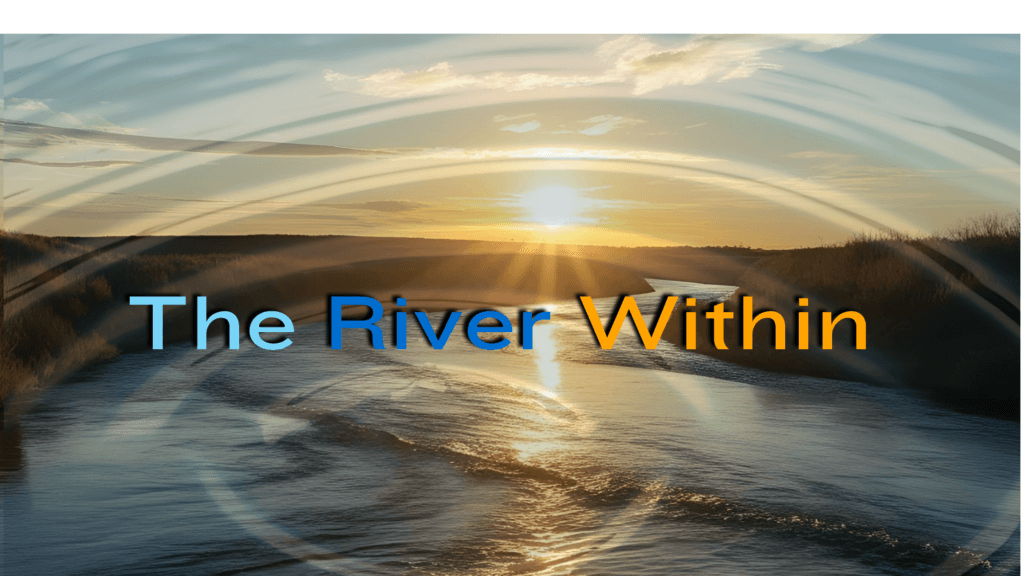
Think of your “self” not as a solid statue, but as a river, endlessly flowing and transforming. Just as the ancient philosopher Heraclitus observed, “No one ever steps in the same river twice.” The waters are always new, always moving.
This isn’t to say that our experiences, our roles, or our beliefs don’t matter. They are the currents that shape our course, influencing our journey. Our interactions with others, the conversations we have, the moments of reflection we embrace – these all subtly alter the flow, contributing to the “you” that is constantly emerging.
Consider the world around us. Our identities are also shaped by the societies we live in, the unspoken rules and expectations, and the complex web of relationships that surround us. We are not islands, existing in isolation. To ignore these external forces is to miss a fundamental part of what makes us, us.
And yet, even amidst this constant change, there’s a fundamental sense of continuity, a core that persists through the transformations. Think of it as an inherent potential, a capacity for growth and evolution that is always present. This “ideal” we move towards isn’t a final destination, a fixed point to reach, but rather a direction, a guiding light on our personal journey.
This idea resonates with ancient wisdom across cultures. Eastern philosophies, like Buddhism, speak of impermanence – the understanding that everything, including ourselves, is in a state of constant flux. Our thoughts, feelings, and experiences arise and fade like ripples on the water. Clinging to a rigid sense of self is like trying to hold onto those fleeting ripples. Similarly, the Taoist concept of the Tao emphasises the ever-flowing and ever-changing nature of the universe, reminding us that the only constant is change itself, and that wisdom lies in embracing this natural rhythm.
What are the benefits of seeing ourselves in this way? It frees us from being defined by past mistakes or previous versions of ourselves. It instills the understanding that we are always capable of growth and transformation. It suggests that nothing can truly define or limit us, because the “us” is not a fixed entity to be contained.
There’s an ancient wisdom that speaks to this unfolding nature of being, in the Hebrew scriptures, YHWH tells Moses, “I shall be who I am becoming.” And there’s a profound truth in the idea that our worth isn’t something we earn or achieve. Like the inherent value recognised in a person before they’ve even begun their life’s work, we are “worthy” simply by being.
Once we really grasp this, the need to constantly prove ourselves, to build walls of protection around a fragile ego, begins to dissolve. We can embrace our authentic selves, even in our imperfections and stumbles, knowing that we are all on a shared journey, moving forward together. As the Julian of Norwich professed, “All shall be well.”
So, I ask you, as I continually ask myself, “How can we truly embrace this ever-flowing river within? How can we cultivate a sense of self that is both grounded in the present and open to the endless possibilities of who we are becoming?” The journey of discovering our unfolding selves is a lifelong adventure.